Chennai, Tamil Nadu
Rajiv Gandhi Government General Hospital (RGGGH)
Government hospital deployment of cloud PACS and radiology workflow on Radiolinq — secure DICOM archiving, remote reads, and integrated reporting for high-volume public healthcare.
Cloud PACS with no local installs — archive studies online, report with AI, connect RIS + PACS, and run teleradiology from one platform.
Zero-footprint cloud PACS means radiologists never wait on workstation installs or VPN tunnels. DICOM studies live in a secure cloud archive; your team opens them in Chrome, Safari, or Edge with full diagnostic tools. Radiolinq layers RIS + PACS integration, AI-assisted reporting, voice dictation, and teleradiology on top — so imaging centres and hospital networks across India deploy in days.
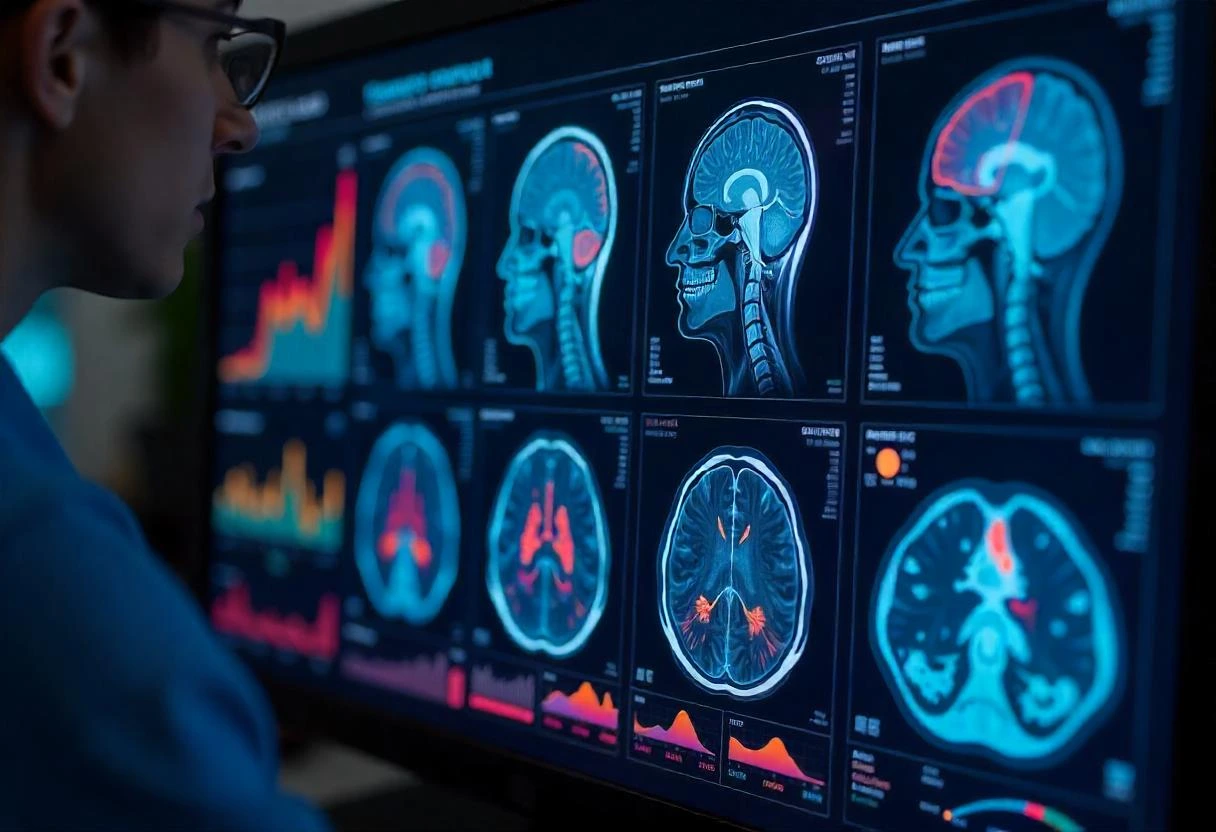
Less IT, faster go-live, full RIS + PACS on the cloud.
Radiologists log in and read — no PACS client, no VPN, no local cache servers.
Modalities send studies straight to a scalable, HIPAA-ready online archive.
Draft findings, templates, and voice-to-text cut reporting time by up to 82%.
HL7 and FHIR keep orders, statuses, and reports aligned with your RIS + PACS workflow.
Elastic DICOM storage that grows with your study volume.
Route, prioritise, and distribute reports automatically.
Standard RIS + PACS connectivity via HL7 & FHIR.
| Feature | Cloud PACS | Traditional |
|---|---|---|
| Access | Any browser, any OS | Fixed PACS workstations |
| Deployment | Days | Weeks of imaging IT |
| Updates | Automatic in the cloud | Manual client upgrades |
| RIS + PACS | Unified Radiolinq platform | Siloed vendors |
Updated 24 October 2026. How imaging centres and hospital radiology departments cut over without stopping reads.
Modalities or a gateway DICOM-send into Radiolinq. No new server room, and the current PACS can keep receiving a copy during the parallel run.
HL7 or FHIR carries accession numbers and patient context from your RIS so each study opens with the right worklist entry.
Radiologists read real CT and MR cases in the browser, including priors they still compare against, before anyone retires the local archive.
Once turnaround and report delivery are stable, storage, backups, and VPN access move off the on-premise PACS.
The full buyer checklist, including pricing factors and what to ask any cloud PACS vendor, is in the Cloud PACS guide. RIS order sync is covered on the RIS + PACS page.
Government and teaching hospitals trust Radiolinq cloud PACS for secure, scalable medical imaging.
Chennai, Tamil Nadu
Government hospital deployment of cloud PACS and radiology workflow on Radiolinq — secure DICOM archiving, remote reads, and integrated reporting for high-volume public healthcare.
Chennai, Tamil Nadu
Teaching hospital imaging workflow on cloud PACS with browser-based DICOM viewing and RIS-connected reporting — scaling reads without expanding on-premise PACS hardware.
Enterprise controls for patient data in India and cross-border healthcare standards.
Role-based access, audit trails, and data residency choices aligned with India’s Digital Personal Data Protection Act (DPDP) expectations for healthcare processors.
Encrypted DICOM storage in transit and at rest, SOC 2 certified data centres, and ISO 27001 certified processes for imaging workflows.
DICOM routing from CT, MRI, X-ray, and ultrasound; HL7 and FHIR connectivity to hospital RIS, HIS, and EMR systems.
Transparent per-study pricing for telereporting starts from ₹5/case on high-volume plans. View cloud PACS pricing →
Cloud PACS is a browser-based Picture Archiving and Communication System that keeps DICOM studies in the cloud. With Radiolinq, you can view, report, and share medical images from any device — without on-premise servers or a VPN.
Radiolinq is trusted by 500+ healthcare facilities across India for cloud PACS software, AI reporting, and teleradiology. Our unified RIS + PACS platform delivers zero-footprint DICOM viewing, faster reporting, and enterprise security — without local infrastructure.
Yes. Radiolinq cloud PACS uses encrypted storage, HIPAA compliance, SOC 2 certified data centres, role-based access controls, and geo-redundant backups to safeguard patient data.
Yes. Standard HL7 and FHIR integrations connect Radiolinq cloud PACS with leading RIS, HIS, and EMR systems — making it a complete RIS + PACS solution.
Hospitals, imaging centres, teleradiology groups, and independent radiologists use cloud PACS to store DICOM studies, support remote reads, and shorten reporting time — without maintaining local infrastructure.
Telereporting plans on Radiolinq start from ₹5 per case for high-volume sites (up to ₹12/case on smaller tiers). Full cloud PACS and storage packages depend on users and DICOM volume — see radiolinq.com/pricing or contact us for a quote.
Modalities send DICOM to the cloud archive, and HL7 or FHIR keeps orders and reports matched to your RIS. Radiolinq scopes priors, hanging protocols, and a parallel run during onboarding, so the existing PACS stays available until reads are verified in the browser viewer.
Studies are stored as standard DICOM, which is the portable format used to move archives between PACS vendors. Confirm retention years and the export process in your agreement before go-live, and test a sample export during onboarding.
Book a demo and see browser-based DICOM viewing with RIS + PACS and AI reporting.