Chennai, Tamil Nadu
Rajiv Gandhi Government General Hospital (RGGGH)
Government hospital deployment of cloud PACS and radiology workflow on Radiolinq — secure DICOM archiving, remote reads, and integrated reporting for high-volume public healthcare.
Sync worklists from your RIS, archive and read DICOM in the cloud, and return signed reports to clinicians — one platform instead of bolted-together vendors.
A Radiology Information System (RIS) manages scheduling, orders, and reports. PACS stores and displays DICOM imaging. When they are separate products, staff re-key data, interfaces break, and turnaround suffers. Radiolinq RIS + PACS unifies both: HL7 and FHIR connect your hospital RIS, HIS, or EMR; studies land in secure cloud PACS; radiologists report with AI-assisted tools; finalized reports flow back to the ordering system automatically. For cloud archiving and viewer details, see our Cloud PACS product.
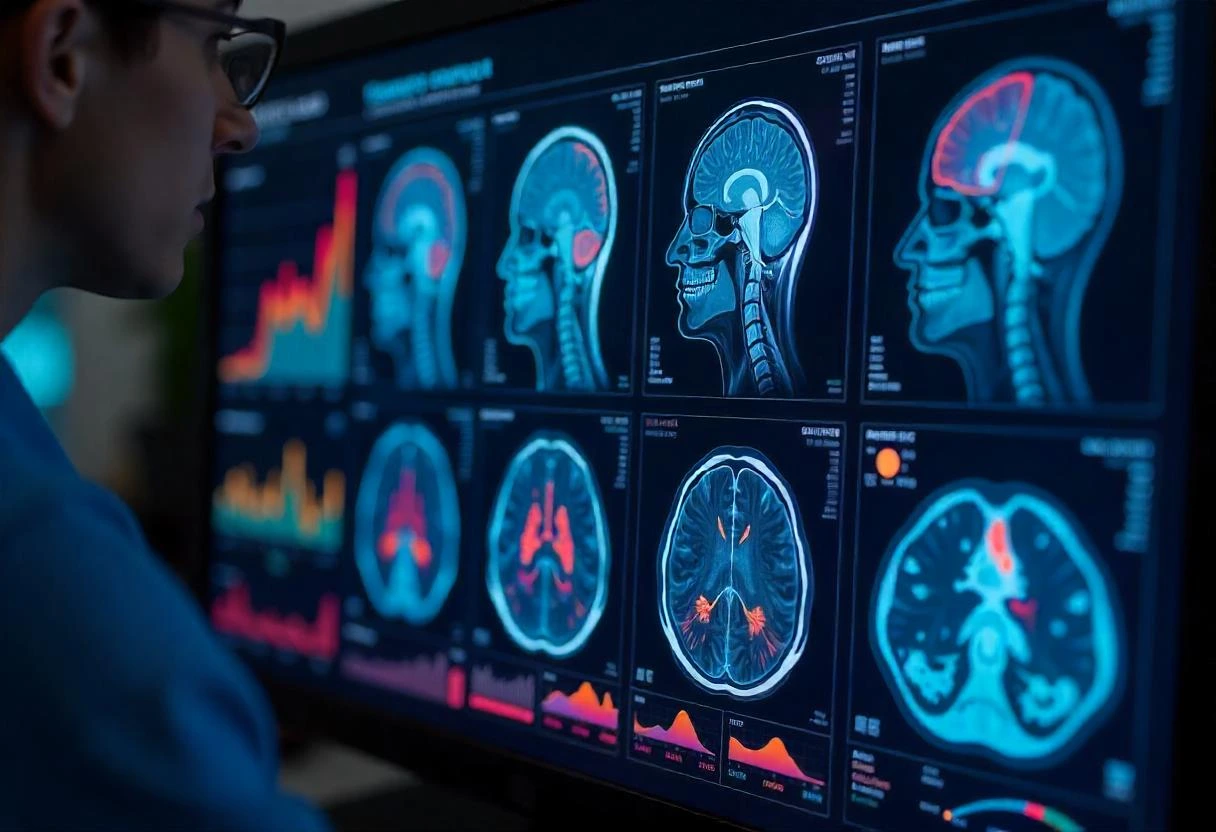
One vendor, one workflow — built for hospitals, imaging centres, and teleradiology networks in India.
HL7 and FHIR sync orders, patient context, and reports with leading RIS, HIS, and EMR systems.
DICOM archive, zero-footprint viewer, and reporting live in the same platform — no middleware maze.
AI drafting, structured templates, and voice dictation help radiologists finish reports sooner.
Encrypted storage, role-based access, and geo-redundant backups for HIPAA-ready operations.
Inbound HL7/FHIR orders populate radiology worklists with correct priors and demographics.
Signed reports return to RIS/EMR and referring physicians with audit trails.
| Feature | Radiolinq RIS + PACS | Separate RIS & PACS |
|---|---|---|
| Integration | Built-in HL7/FHIR on one platform | Custom interfaces between vendors |
| Go-live | Days with cloud deployment | Months of multi-vendor projects |
| Data entry | Single patient & order record | Duplicate entry and mismatches |
| Support | One Radiolinq team | RIS vendor vs PACS vendor blame game |
| Scaling | Add sites and volume in software | New hardware and interface work |
| Cutover | Parallel run, then retire local PACS | Big-bang switch across two vendors |
Updated 24 October 2026. Four checks before you switch reporting off the old system.
HL7 or FHIR messages create the radiology worklist with the correct patient, accession, and modality. Mismatches get fixed in testing, not after go-live.
Each modality or centre routes studies into the cloud archive. Priors needed for comparison are loaded before radiologists depend on them.
A finalized report updates status in the RIS, HIS, or EMR and stays tied to the same order the clinician placed.
Role-based sharing gives referring physicians the study and report without a separate image portal project.
Archive, viewer, and storage details sit on the cloud PACS product page. Vendor comparison and pricing factors are in the Cloud PACS guide.
Government and teaching hospitals trust Radiolinq RIS + PACS for secure, scalable medical imaging.
Chennai, Tamil Nadu
Government hospital deployment of cloud PACS and radiology workflow on Radiolinq — secure DICOM archiving, remote reads, and integrated reporting for high-volume public healthcare.
Chennai, Tamil Nadu
Teaching hospital imaging workflow on cloud PACS with browser-based DICOM viewing and RIS-connected reporting — scaling reads without expanding on-premise PACS hardware.
Enterprise controls for patient data in India and cross-border healthcare standards.
Role-based access, audit trails, and data residency choices aligned with India’s Digital Personal Data Protection Act (DPDP) expectations for healthcare processors.
Encrypted DICOM storage in transit and at rest, SOC 2 certified data centres, and ISO 27001 certified processes for imaging workflows.
DICOM routing from CT, MRI, X-ray, and ultrasound; HL7 and FHIR connectivity to hospital RIS, HIS, and EMR systems.
Transparent per-study pricing for telereporting starts from ₹5/case on high-volume plans. View cloud PACS pricing →
RIS PACS (or RIS + PACS) combines a Radiology Information System for orders and reports with a Picture Archiving and Communication System for DICOM images. Radiolinq delivers both in one cloud platform so radiology workflows stay connected from order to signed report.
Radiolinq is used by 500+ healthcare facilities across India for integrated RIS + PACS, cloud DICOM archiving, AI reporting, and teleradiology — without maintaining separate RIS and PACS vendors or on-premise servers.
We use standard HL7 and FHIR interfaces to exchange orders, status updates, and finalized reports with your RIS, HIS, or EMR. Our team maps your workflow during onboarding so studies and reports stay in sync.
You need both capabilities — scheduling/reporting (RIS) and image storage/viewing (PACS). Radiolinq provides both, so you can replace legacy PACS, extend an existing RIS, or run the full stack on Radiolinq depending on your site.
Yes. DICOM studies are stored in secure cloud infrastructure; radiologists access images and reporting from any browser. RIS connectivity runs over standard healthcare interfaces to your hospital systems.
Integrated RIS + PACS pricing depends on sites, users, DICOM volume, and HL7/FHIR scope. Telereporting on the same platform starts from ₹5/case on enterprise tiers — see radiolinq.com/pricing or request a tailored quote.
Order mapping over HL7 or FHIR, DICOM routing from each modality or site, reporting setup, and a check that signed reports return to the RIS or EMR. Imaging centres often finish in days. Multi-site hospitals add interface testing and a short parallel run beside the current PACS.
Priors that radiologists still need for comparison can be sent into the cloud archive before cutover. The legacy PACS stays online until those comparisons open correctly in the browser viewer and report status flows back to the RIS.
Book a demo to walk through order sync, cloud reading, and report delivery with your workflow in mind.